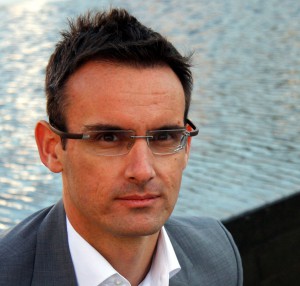
Video: Playing the Game of Thrones at RSA Europe 2013

I’m no HBO, but I am pleased to say I have just posted a video of my talk at RSA onto YouTube, entitled “Playing the Game of Thrones; Ensuring the CISO’s Role at the King’s Table. Recorded by my good friend and evil twin brother Kai Roer (@kairoer) it is the session in its entirety along with pertinent slides throughout.

I was pleased with my personal performance at the time, but of course watching it I see many areas I could improve upon. (I am planting my feet better, but still by no means do I stand still for instance.) The staging of the room was very poor, but unfortunately there was not a lot that could be done about that, and many other speakers had to put up with the same issues.

The full abstract for the talk (from the initial submission) is:

Why is is the CISO constantly frsutrated with being required to report to areas of the business that either don’t understand it or conflict with so many of the core deliverables of the role? Too often it is beholden to the agenda of the technology focussed CIO or blinkered by the financial constraints of the CFO. How has the role even got to this place?

Starting with a brief historical look at where the CISO role was borne from in the first place, progression to this current state of affairs is shown to be inevitable.  What is needed is a plan to disrupt this status quo and ensure a CISO is in a position to not only understand the power of the business intelligence that is produced in a well managed environment, but how to ensure it reaches the board in a way that is understood.

Through the use of a universally understood information security model, the CIA triangle, the presentation explores three key areas to assure the success of the CISO in being asked to report to the board rather than being summoned to it.

Initially the actual source of the information, its gathering, the methods employed and the common pitfalls often seen are explored and clarified. What are the common mistakes, how are they rectified and how can you recognise when the data gathering programme is going awry?

Secondly, how is it being pulled together, and what is it saying? How to understand the audience it is being presented to and what can be done to improve its chances of being understood.

Finally, how does the CISO make the final push for the board? What are the key principles that need to be understood about supporting a successful business, what home truths about the information security industry are rarely mentioned and how can the CISO differentiate themselves from those that came before?

This presentation seeks to broaden a CISO’s skills beyond the technical and the post nominal focussed industry accepted norms and into those that actually help a business do what it does best.

The content from this and my other recent talks will start to appear on this blog as I put my ideas down more into the written word rather than a presentation format. I have just one more speaking engagement before the end of the year now, and one in the first two weeks of the new year, so I hope to find more time to write rather than created decks.

I hope you enjoy the video, and as always I would greatly appreciate your feedback both positive and negative/constructive.


The different view of risk modelling

Traffic lightAs someone whose primary function at work is the ‘management’ of risk in all of its glorious forms, I have over the years become very comfortable with its accepted definition and how to measure it. ISO 27005:2008 was my bible, giving me the flexibility to choose a schema that worked for my particular environment as well as the credence that I was doing it right. I always knew that assigning arbitrary numbers to things wasn’t exactly the most scientific way of actually measuring something, but I could deal with that by simply talking about “indicative values” and “helps with prioritisation”.

It was a little under two years ago at the RSA conference that I attended a talk entitled “Pimp My Risk Model: Getting Resilient in a Complex World” by David Porter, and he spoke about a new approach to risk modelling. Rather than focussing on what could happen, and then play that through to the conclusion of an impact that is then measured, it instead focussed on what the desirable outcomes were in the first place and then worked backwards establishing what was required to achieve them, basically dependency modelling. Not only was this more efficient and scalable as not all permutations of threat/vulnerability/asset (for instance) are required to be worked out, it provides better information for early decision making.

The concept is not new, and has its roots in the late last century in the financial markets/actuaries who were looking at better ways to model and manage risk.

There are a number of proponents to this approach, all of whom have a far better understanding than me of this approach, but despite this in the last two years I have simply not seen it in a practical form that can be used every day. Unfortunately, and I am sure I am not alone here, if I can’t implement it quickly it gets passed over for the next best thing that can be. In fact, and perhaps in my own blinkered universe, the approach itself barely raised a murmour since. And yet the concept had stuck with me especially on the few occasions when I had heard it talked about.

It was on Russell Thomas’s blog, exploringpossibilityspace, that I saw just the other day this very approach being touted again. What I enjoyed about this post was the balanced and educational view of the traditional approach (little “r” approach in Russells’s parlance) versus the new dependency modeling approach (big “R”). I think the criticism of ‘r” methods is well founded, although it is widely understood in business and when used properly can help produce at the very least tactical indicators of risk to the business.

My challenge with the ‘R’ approach is that I have yet to see it applied in practical terms and in a way that is easy to digest and understand (I think I hurt myself about two thirds of the way down the article trying to get to grips with the concepts!). As a result therefore, getting business buy in is going to be extremely challenging. Partial information from an ‘r’ approach reaching the business successfully is going to be better than no information from an ‘R’ approach (however better the data is) reaching the business.

I would strongly recommend everyone to read Russell’s writings on this risak model, which also contains links to other resources as well.

There is more work to be done, but I hope it focuses on making it possible to use the approaching a day to day environment; they say there is nothing new in the world of information security, but I have high hopes for an approach to risk modeling that will allow me to do so much more for the business in terms of long term, strategic guidance and support.

And when I can use this model in Excel, count me in!

<Some of you have commented on my extended absence, but a busy few weeks followed by a lovely holiday camping in France took priority. Back in the saddle now and very much looking forward to your comments and feedback!>

Charlie?1 (2)

Charlie?1


Why I am an Analogies Project contributor

Bruce_Hallas-300x286That devilishly handsome bloke you see to the right is Bruce Hallas. I used to go to school with him nearly 25 years ago, and then last summer, at the first old boys school reunion that our year organised since leaving I met him again, and it turns out we are in the same infosec business. I spoke to him about all of the good work I am doing, the company I work for, the many countries I visited and generally tried to make myself feel more important than the skinny eighteen year old I was when I last saw him. He told me that he runs his own infosec consultancy, his own blog, works with the UK government, and was in the process of setting up “a project” as a freely available, self funding, resource of analogies/stories to help people better understand information security. (Bruce immediately won the “my life is awesome since leaving school” competition of course.)

Since that time, The Analogies Project has grown from one man, an idea and a website to something producing real, quality content, and with a very promising and bright future.

In the words of the Project itself;

The Analogies Project has a clear mission. To tackle the unintelligibility of information security head on and secure the engagement of a much broader audience. Its aim is to bridge the chasm between the users, stakeholders and beneficiaries of information security and those responsible for delivering it.

Through a series of innovative initiatives the Analogies Project will enable information security professionals to effectively communicate with their chosen audiences. The content will be delivered through a variety of alternative communication techniques, media and partners.

The part of this project that I like the most is that it is essentially a community project. Bruce isn’t charging money for membership to the analogies as they are written (and they are coming thick and fast now!), and none of the contributors are charging for their work either. There are not only the web contributions in the form of a library, but a book planned, a conference, and even an opera! With the momentum that is currently behind the project at the moment there is every reason to believe in its future success.

So why am I contributing? Honestly, I have selfish and philanthropic reasons to do so. Obviously it gets my name out there, allows me to practise my writing, test some ideas and also say “I was there from the start”. All that aside though, I have frequently struggled in my day job to get infosec concepts across to people, either directly, in meetings or even in awareness training. To have had a resource like this available to me five years ago would have made my life so much easier, allowed me to advance the infosec “cause” more effectively and given me a set of tools I knew were consistant with the prevailing thoughts of industry commentators. Having a centralised, peer validated, toolkit available is fundamental to us as professionals when it comes to the messaging we give to our users, clients, bosses, teams and even the infosec community as a whole.

It’s still early days, but I have submitted my first contribution just last week (soon to be published I hope) and I am already inspired enough to be working on my second and third. There are a number of analogies already in place, and I would urge you to read them and consider them in the context of your current communications to your audiences, whomever they may be.  The book will be another important milestone and one I hope to play a part in; indeed I hope to be able to play a part in the the project for the forseeable future, and why I am happy and proud to display my “contributor” badge up on the top right of this site.

TAP-Contributor-Semi-Transparent-250x160

If you feel you have something to contribute, then head over to The Analogies Project and let Bruce and the organisers know. If you don’t feel ready to, then certainly check it out anyway. You won’t regret it.


The ISSA-UK and why I like them

I have always had a soft spot for the ISSA-UK; ISACA and (ISC)2 are all very well (and have a slightly different  value offering what with their examinations and credentials), so the ISSA have sometimes in my opinion been compared alongside them somewhat unfairly. I like them for a number of reasons:

  1. Great value for money – at less than £100 per year and with a considerably higher number of events per year (at least in London) than (ISC)2 and ISACA, that’s a lot of potential CPE’s.
  2. Quality of speakers; I am biased (having now become an ISSA-UK speaker), but I have always been impressed with the quality of speakers. The highlight for me of the last 12 months for instance was Bill Hagestad  when he spoke about the Chinese cyber threat.
  3. Awesome people and networking; I am constantly meeting great people and having great conversations with them, infosec related and otherwise. Just tonight I made tentative arrangements to do a talk alongside someone else, discussed a high profile speakers apparent downfall (always useful for the future when the inevitable happens to oneself) and “connected” with a number of highly intelligent and rightly opinionated people.

Overall I think of them as having the least of an agenda with no exams to sell or certifications fees to maintain, and this is why it puts them at the top of my list.

Telling it like it is apparently

Telling it like it is apparently

Last nights talks were very similar to the Bristol one of a few weeks ago in that Richard Hollis presented on Deep Threat – Top 10 Lessons to Learn from the Online Adult Entertainment Industry, and I did my UFO’s, Dirty Dancing and Exploding Helicopters, a Hollywood guide to risk management presentation again. The final presentation was by Adrian Wright, ISSA-UK VP of Projects on Securing The ‘Internet of Things’ – Implications and Key Questions. 

I have to apologise to Adrian as I overran on my presentation putting the pressure on him to be as succinct as possible. Running over time is rightfully seen as something of a cardinal sin for a presenter, but in my mitigation it was because of the level of interaction from audience was just brilliant, and we got a good number of opinions across all of the topics put forward.

I have commented on Richard’s excellent presentation from when he gave it in Bristol, but Adrian’s I had not seen before. It was utterly fascinating and presented (as expected) very well by Adrian. What struck me the most was that the adoption of new technology is just increasing in speed over time almost exponentially. What this means for the internet of things is that before we know it, literally in the next few years, we will see a massive shift in how we consume food, control our homes and even park our cars. Only time will tell, but in this case, not a lot of time.

A great evening as usual and my tanks go to Gabe Chomic (@infoseccrow) for the invitation.

The presentation from the night is here in PDF and native Keynote, and as always if anyone would like to continue to conversation with me you know the usual channels!


Taking RANT to New Levels

Noise Next Door giving conferences a new twist

Noise Next Door giving conferences a new twist

For a variety of reasons I have been unable to post here as frequently as I have liked, but the great advantage of attending a conference is that it does spur one into action to get something written down. Tuesday Jun 11th saw a new kind of conference come to town, the RANT conference. Based upon the monthly RANT forum there were only three individual speakers with the rest of the sessions effectively panel debates but with significantly more audience interaction encouraged.

There were a number of highlights for me, not least all of the people I met there, new friends and old. One of the big surprises for me was the opening keynote from Mark Stevenson of the League of Pragmatic Optimists. I thought it an odd choice of speaker, a futurologist, but very much enjoyed his talk once I got over myself. he looked at (amongst many other things)  how the digital revolution is changing our lives daily. What it came down to though is that despite the massive amount of change that has gone before us, the digital revolution is merely the cocktail sausage of dinner; we cannot begin to imagine what is around the corner.

I also enjoyed watching Javvad play up to his InfoSec rockstar status alongside Neira Jones and the irrepressible Stephen Bonner. It was unfortunate that the final panellist, Ed Gibson, killed the dynamic of the panel dead, changing what should have been an upbeat and funny session into a monologue of personal dislikes that crossed the line into embarrassing.  I thought Javvad played to his RockStar persona very well, but also presented how he made his way to the level of industry notoriety he currently enjoys and the benefits it actually brings to the industry. The serious point of them actually being ambassadors for infosec was quite rightly made. Unfortunately Ed did the same for the next panel on state sponsored espionage, killing what should have been a powerful insight into the topic given his background. I understand Ed is a very highly rated speaker, but on the evidence of yesterday I won’t be rushing to see him speak, and how he handled himself was unfair on the other panellists and indeed on us as an audience.

The Boy Band Strikes back

The Boy Band Strikes back

The rest of the day went very well though, with plenty of laughs with the University Challenged pitting the grey hairs of the industry against the students of Royal Holloway, and a session on security awareness that I was invited to participate in alongside Geordie Stewart, Charles Clarke, Christian Toon and my old mate Bruce Hallas. The reaction from the audience was very positive, with some great questions and opinions. We didn’t all agree, which is exactly what needs to happen; if we all agree, nothing changes, but if there is dissent then that can finally lead to actually driving change in the industry. On the whole it was well received and moderated nicely by Jim Shields, although someone did tweet that he thought the conversation was “same old same old re training me thinks” which is actually fair enough; I do think however that we can only stop talking about it when it is “fixed” (whatever that means!).

Stephen Bonner’s presentation was a distinct improvement upon what he presented at BSides, and was a thoroughly enjoyable rant, replete with chocolate missiles for the audience.

The excellent Twist and Shout were managing the video and photography, and shared many of their corporate training videos in the breaks between sessions that not only gave a very polished and slick feel to the whole day, but also some light relief.

Networking drinks were copious and enjoyable, and the dinner was excellent with after dinner entertainment from Jim Shields in his stand up comedian alter ego and an improv comedy troupe Noise next Door. A fuzzy head this morning tells me I had perhaps a little too much fun.

It was an awesome conference overall, and I hope to see it grow and become part of the established circuit. The format can only get better as while there is a place for the traditional presentation of one person delivering content and then taking some questions has its place, there is a huge advantage to the RANT approach. It allows the audience to engage far more effectively and I would hazard a guess that the audience actually retains more than the standard 20% of content afterwards. Huge congratulations to Acumin for not only making it happen, but also for ensuring it was as free from the commercialisation of so many other vendor driven events, a hugely refreshing approach. The biggest congratulation of the day though must go to Gemma for making it happen.

photo[5]