NOT another Heartbleed Post

no-heartbleed-218x218But rather a heartfelt thank you and cry for your support! In exchange for not writing yet another piece on Heartbleed (enough coverage by me here  from last week) I thought I would take this opportunity to talk about the European Security Blogger Awards.

In it’s second year only, the competition has certainly heated up with a large number of high quality blogs, blogs and podcasts on offer to vote for. There is a good commentary from IT Security Guru and Brian Honan on what it is all about here.  I am thrilled, excited and pleasantly surprised to have been nominated in five categories this year:

  • Best Corporate Security Blog
  • Best Personal Security Blog
  • Most Entertaining Blog
  • Most Educational Blog
  • Grand Prix best Overall Security Blog

(I’m not sure how I got into the corporate blog category, but it’s all good!)

Thank you to all of those who nominated this blog in all of those categories, but with the quality amount of the competition I shall have to start practicing my Hollywood Oscars “really upset but can’t show it that I lost to that charlatan” face when the winners are announced.

One of my other internet tenancies has also been nominated three time, Host Unknown:

  • Best Security Video Blog
  • Most Educational Blog
  • Best New Security Blog

With less than a year in “business” it is great to be nominated here as well, and we have a number of very exciting activities coming up over the next few months.

I said this last year, and it is worth repeating again; this list of nominations represents the very best of what the information security blogging community has to offer. Some of it serious, some of it humorous and some of it acerbic, but all of it providing a viewpoint of one kind of another that is worth listening to, reading or watching. Use this as a shopping list for your RSS reader.

Voting closes on Wednesday 23rd April, and the awards will be announced on Wednesday April 30th at the Prince of Teck Pub, Earls Court.

Thank you again to those of you who nominated me, time for the voting campaign to begin!


A more secure cashpoint/ATM transaction?

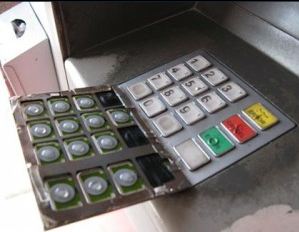
skimgallery1There has been much written and talked about over the years about the use of skimming devices and cameras being installed on cashpoints (ATM’s for my international readers), their increasing complexity and ability to seamlessly blend into the cashpoint itself. With the card being entered and read, and the PIN code either intercepted with lay on keypads or filmed with cameras, the criminals ability to clone cards is quite significant, and the financial rewards high. Most of us, if we were honest, would struggle to see a sillfully crafted and installed skimmer on an average ATM.

Why are we still so reliant on this kind of security? Sure, it is technically two-factor, with the card that I have and the PIN that I know, but as my previous statements show very clearly, this security can be bypassed very easily.

The Royal Bank of Scotland (RBS) quietly announced a new feature last year to their mobile app that allows cash to be removed from an RBS or NatWest cashpoint without a card. Given there has been much research on the fact that people were no more likely to forget their wallets and purses than their phones, and actually become more distressed at not having their phone over their wallet, the bank could see a shift in how people were becoming increasingly reliant on their smartphones.

The process is straightforward; after logging into the (already downloaded) app, and pressing  “Get Cash” one simply types in the amount of money they would like to withdraw, and is then presented with a six digit, one time use PIN. This PIN can also be texted or sent to someone else if need be. (VERY useful to help out friends and family in distress.) One then uses an RBS or NatWest cashpoint (unfortunately other banks do not participate in this scheme) , presses enter on the keypad, and then enters the six digit PIN number twice followed by the amount of money that was originally requested. The cash is then dispensed. If more money is required, the process is repeated and another, different, six digit PIN is issued.

To my mind this is an excellent innovation, and other thought so too, with the creators behind the enhancement, SapientNitro being awarded a Cannes Lion at last years show. A slightly cheesy advert follows…

(Note: at this point it is worth me declaring my interest, as I am an employee of Sapient, the parent company of SapientNitro. That said, I was using the service before I realised it was Sapient that came up with the idea in the first place!)

This works in many ways:

  1. 1: The pin is only used once, so it doesn’t matter if a skimmer is in place, it is recording only a one time password.
  2. 2: Your card cannot be cloned as it is never used.
  3. 3: It is convenient because nights out only involve looking after your phone, not you phone and cash card and cash!
  4. 4: Even if you phone is lost, it is password protected, tracked, and you r banking app is also PIN protected with more than a four digit pin code (it is, right?). You can also wipe your smartphone remotely in most cases.

pizzaexpressA UK food chain, Pizza Express, did a similar thing last year as well, whereby on the bottom of the receipt is a unique code that allows people to pay with PayPal; again this is smart (your misgivings about PayPal aside) as your card cannot be taken around the back and cloned without your knowledge, as the payment is sent directly from PayPal to the restaurant and notification received on the till. Of course every time I have tried to use it the code has always been misprinted stopping me from doing so! Lovely idea nonetheless…

So what is the upshot of this? Most importantly I think it shows how with the judicial use of technology we can keep one step ahead of the criminals. Of course they will catch up, and of course there are other security implications (a rise in smartphone theft perhaps?) but RBS has shown that a relatively small change in their systems can result in a huge change in the security of their transactions. As of writing I am not aware of any other UK bank having this capability (they seem to be focussing on the ability to send payments to friends rather like PayPal than anything else), but this kind of approach should become the new norm.

It is this application of security alongside the ability to truly understand their clients and their needs that in this case has allowed RBS to steal a march on their competitors. I know this simply because of the looks on the faces of my friends when I take cash out of the cashpoint without using my card; it is magic, and they like it…

This is truly a case over security versus convenience… but with added convenience.


Why >WE< must meet the demands of the business

At the recent RSA conference in San Francisco, David Spark asked the question “Why doesn’t the business align better with security?” and there were some interesting responses:

I actually only agreed with the last comment from Michael Farnum (whom I have followed on Twitter and finally got to meet for the first time at RSA… see “bald men of security” in my RSA roundup). He rightly says that that the business should not align with security, as it is the role of security to align with the business. Compare this to the question “Why doesn’t the business align better with IT?” or “Why doesn’t the business align better with HR?” and the question immediately becomes moot.

levelI think David was right to ask the question because it has uncovered with greater clarity something that I and many other have been talking about for some time now, namely that security for too long has been carying out secrurity for its own sake rather than supporting the business achieve its goals. In my own paraphrased words “this is what I need security to do to help me sell more beer“.

This was reiterated by Andy Ellis at a session at RSA where he said precisely this;

are you the conscience of the business or an enabler to the business?

Finance is there to provide money, make that money work more effectively and ensure the money is providing the best value for the good of the business. IT is there to provide technology services at the best possible value for the good of the business. HR is there to provide people, support them, nurture them and align them (or move them  out), for the good of the business.

What is your security programme doing for the good of the business, rather than the good of security? Asking this question alone will help you along to your business goals and actually help them achieve their goals, not yours.


If It is Too Good To Be True, It Probably Is – Cross Post

(Originally Posted on Information Security Buzz on 15 January 2014)

There are plenty of tips on the internet that give great advice on how to avoid phishing scams, and there will be other authors on this site that will be giving very similar advice. For me though, it always comes down to the following three thoughts that I keep in mind whenever I see an email that could possible lead to a scam.

1. Is it too good to be true?

Infosecurity-Buzz-January-2014.002.jpg.001-300x168If the email in question is offering me something for nothing, especially if there is money, or a monetary value involved, this type of email falls into the “too good to be true” category. I have yet to come across an example of when someone really was giving away iPad’s, cash or holidays without some kind of quid pro quo involved. If your answer to the above question even looks like it might be a “yes”, the email and its contents can probably be ignored.

2. Don’t Click it!

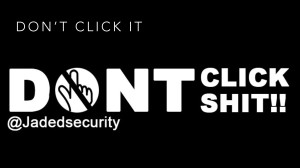
Infosecurity-Buzz-January-2014.002.jpg.002-300x168I have borrowed this particular phrase from Jaded Security who coined it a few years ago, and I like it because to be honest it is simple and memorable advice. There are nuances to this of course, but unless you are experienced just don’t click links in your email (see number three). As you get used to looking out for this kind of email there will of course be other telltales that will help you know if an email is genuine or not. For instance, is the email from a close friend, but they haven’t addressed you by your nickname, and seem to be oddly formal, or have more spelling mistakes (or even not enough) in their message? It could be that they have been compromised and you are in their address book and therefore being targeted.

Some people regularly send links in emails, others almost never; if that’s the case, ask yourself why they have suddenly started today seining you a link to a sneezing panda clip.

Finally, if your bank sends you a link to change your password because of system upgrades, don’t click the link they send, but go to your usual bookmark for them. Your bank should never do this anyway, but clicking on a link in an email like this is almost guaranteed to not send you to your bank, but a very convincing fake site set up to harvest your usernames and passwords. Just don’t click it.

3. Fail Safe

Infosecurity-Buzz-January-2014.002.jpg.003-300x168It is always better to mistake a genuine email for a scam rather than the other way around. The consequences of clicking something are very serious whereas the consequences of not clicking on the attached link are rarely, if ever, serious. Additionally, if it is a genuine request, the sender is likely to send a reminder or contact you through another medium such as SMS, letter or telephone. Of course there are plenty of scams through these mediums too (another topic perhaps?), but you will have the balance of probabilities on your side, and the knowledge you haven’t done anything stupid.


Cross Post – The Human Element

(Originally posted on the Iron Mountain Information Advantage Blog, November 20 2013.)

lost-keys1Leaving things on the train or in a restaurant, or in fact anywhere is an unpleasant fact of life for many of us. I would guess that almost all the readers of this blog have at some point left their keys, wallet, shopping, hat, gloves, children, scarf or phone somewhere or other. On occasion, such lapses in concentration can be upsetting, costly, or embarrassing and in some rare instances even dangerous. But in most cases what we leave behind is either easily replaceable (gloves), insured/covered (bank cards) or worth the cost to change and replace (keys). It’s very rare that we leave and lose something irreplaceable (presumably you found the kids!). This is because the items we treasure often have significant intrinsic and/or emotional value. A good example would be family heirlooms, passed down from generation to generation; we treasure them and therefore take care to protect them, storing them in a safe (or at least a safe place) to be taken out only on special occasions.

What about leaving data somewhere? It wasn’t so long ago, that civil servants and the MOD were criticised frequently in the media for leaving highly sensitive and valuable data exposed in public places. Rarely, it seemed, did a day go by without the Daily Mail bemoaning the inability of the public sector to protect our data. Headlines called for heads to roll. And yet, invariably, these were just the kind of simple, human mistakes that every one of us have made in one way or other. These days, however, the vast majority of data is (or at least should be) encrypted, both when it is on the move and when it’s at rest. Consequently, the loss or theft of encrypted data may now raise fewer eyebrows.

Printed matter, however, is another thing entirely. You can’t encrypt paper documents, and paper is very difficult to secure during transport, without somehow physically attaching it to your person. Taking sensitive documents from one location to another, so often a necessity, quickly becomes a thing of peril. Conceptual drawings, designs, technical drawings, mock ups etc. will often need to be taken to a client site or a manufacturer, and sometimes cannot be sent electronically. After a successful pitch and a few celebratory drinks afterwards those documents could all too easily be left on the night bus to Neasden, unprotected and full of intellectual property and sensitive information. A breach like that can so easily turn a night of celebration into a morning of embarrassment and apologies, followed by the inevitable search for new clients.

Protecting printed documents is difficult, probably more difficult than electronic information, and yet we seem to put all of our efforts into the very latest and best encryption, protected USB keys, and expensive data loss prevention (DLP) initiatives. It’s easier to put in place a technology, especially a “transparent” one than it is to change behaviours.

I would suggest that the information security community needs to address this disparity; the paperless office hasn’t transpired, the digital documents are secured, but paper has been left behind. How can we address this without handcuffing briefcases to people? As usual, it has to come down to awareness, we need to drive home the message that paper should be transported with the same care as electronic records, observing sensible procedures such as ensuring there are always two people present when travelling with paper (to act as more of a reminder than as a physical protection) or even only couriering them with a specially selected and reviewed vendor.

I don’t want to turn the Chief Information and Security Officer into a George Smiley type character, but I do want all of our sensitive records to be treated with the same level of protection irrespective of format.