Direct Hit, Near Miss or Remote Miss? Why you are more confident than you should be.

_39166788_blitz416_gettyIn the years running up to the beginning of the second world war the British government was extremely concerned that in the event of hostilities breaking out, the german Luftwaffe would launch significant attacks against Britain and especially London. With an estimated 250,000 casualties in the first week alone, the consensus was that millions of Londoners would flee, leaving the industrial war engine to grind to a halt. Several psychiatric hospitals were even set up on the outskirts of London to handle the huge numbers of casualties psychologically affected by the bombing.

History tells us this was not the case, despite horrific numbers of casualties and extensive damage to homes, property and businesses throughout London.

A Canadian psychiatrist, J. T. MacCurdy, in his book The Structure of Morale postulated this was because the effect of a bomb falling on a population splits them into three groups:

1. The people killed by the bomb. As MacCurdy puts it

the morale of the community depends on the reaction of the survivors, so from that point of view, the killed do not matter. Put this way the fact is obvious, corpses do not run about spreading panic.

Harsh, but true in this model.

2. The Near Misses, the ones that

feel the blast, … see the destruction… but they survive, deeply impressed. It may result in ‘shock’…and a preoccupation with he horrors that have been witnessed.

3. The Remote Misses. These are the people who hear the sirens, the bombs explode, watch the aircraft overhead, but the bombs explode down the street. For them the experience of the bombing is that they survived easily, unlike the Near Miss group. The emotion as a result of the attack…

is a feeling of excitement with a flavor of invulnerability.

Near miss = trauma, remote miss = invulnerability.

Diaries and recollections of the period certainly support these theories. For instance, when a laborer was asked if he wanted to be evacuated to the countryside (after being bombed out of his house twice) he replied;

What, and miss all this? Not for all the tea in China!

The reason for this attitude, the sense of invulnerability, is that they have been through the very worst of time… and survived. They had faced their fears, and realized they were not as bad as they thought they were going to be, and in fact the result of surviving had given them a sense of elation that made them feel even more alive than before.

This is a very long way of saying that we may very easily view security incidents and breaches like this. Sony (perhaps) are the ones right at the centre of the blast. they are affected directly, and don’t even run around spreading panic because they are too busy dealing with the incident itself.

The near misses, Sony’s vendors, suppliers and partners are probably reeling from the near miss and are probably doing all they can to ensure it doesn’t happen to them. in short why are traumatized.

Finally, there is the rest of us. Yeah baby! Another breach, and it wasn’t us! We are invincible! We don’t need to do anything different at all, because we are survivors!

I think I see an issue here. Every time we are not breached, we become more confidant that we will not be breached, and become over confident and convinced we are having the time of our lives doing great stuff in the infosec world and not being breached. let’s hope that bomb doesn’t drop too close to home to burst that bubble, otherwise Careers is So over ceases to be a funny industry joke and very much a reality. Take the precautions now, take the threat seriously, and do what you can now, before it is too late.

I would strongly recommend reading the Book David & Goliath by Malcolm Gladwell if you would like to read more about this concept as well as others along the same lines.

A personal note…

PubGr_logoI am now under new employment as a result of an acquisition of my previous employer, and I have been fortunate enough to be elevated to Group CISO of the acquiring company. Unsurprisingly this has resulted in a massive new workload, travel schedule and responsibilities, and hence my distinct lack of posts this last few months. Despite this I have still been nominated for European Personal Security Blog 2015 in this years Blogger Awards; thank you!

Additionally, I am so proud to say that not only is my new employer keen to promote this blog internally in the new company, but also thrilled to say we have become the newest sponsor of the European Security Blogger Network.

Finally, I have been on the road a huge amount the last few weeks, including at RSA USA where I was very happy with my presentation at the RSA Studio; I spoke about how we have changed our approach to security awareness, and the use of the Restricted Intelligence product to catalyse it.

There were also talks at Munich Identity Management Conference, although the talks are not public yet.

Next week, Bsides London, InfoSec Europe, European Blogger Awards and RSA Unplugged. I am mentoring a rookie at Bsides, Speaking at infoSec, as well as at the Tripwire booth, sponsoring (and nominated!) at the Blogger Awards, and just watching at RSA Unplugged.

It’s has been a busy few months!
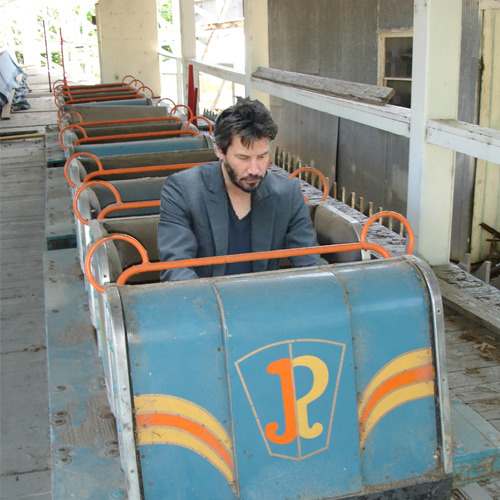

Are you the most thrilling ride at the theme park?

emotional-rollercoaster-53445I recently spent the day in Thorpe Park (a bit like a down market DisneyLand for anyone not from the UK), and we were all looking forward to a day of roller coasters, silly ride photographs, bad overpriced food and generally some good fun. We had never been before, and my kids are now old enough to be able to go on almost all of the rides now. Much excitement was expected.

Yes, we had a good day overall, but not as good as it should have been. The first two rides we tried to get on as soon as the gates swung open were closed because of technical faults; both these rides were at opposite corners of the park, so after 30 minutes not only had we not even had one ride, we hadn’t even got in the queue for one. This somewhat set the tone for the day. At the fourth closed ride my wife gave some unfortunate teenaged park assistant an earful (he was rescued by a senior colleague). At the fifth we could only laugh and accept our fate. And so it went on; the photo booth to collect photos from one ride was closed after we had staged the perfect family shot on the ride, the hand dryers in the toilets all blew cold, cold air on a cold day, vending machines were out of order, and so on. The more we looked the more we found fault.

We still had a good day, but we won’t be going back any time soon, and conceded that in the theme park area at least, the Americans have by far the best theme parks compared to Britain.

The whole experience reminded me of some security groups I have experienced. We very often promise a world of smiling, excited faces, a world made better by our presence and an experience that will surpass your expectations. The reality is often a little more drab than that.

We often see security functions that allegedly “enable your teams to work more effectively”, or “allow you to leverage your creativity while we drive your competitiveness” and so forth. In our drive to be seen to be a benefit to the business (good), we often set ourselves up for failure as we establish these grandiose statements (bad). “Leveraging security to be a differentiator in the marketplace” is great, but only if you can deliver on it. An ISO27001 certification may help your business get more work initially, but if the basic principles of good security practice in your delivery teams is not there, that work will soon be lost. Your company workforce working securely and in harmony is the best way of supporting your business, not having a “security strategy that differentiates us to our clients”.

Let’s focus on getting the rides running properly in your security programme before marketing ourselves in a way that ultimately shows even our hand dryers don’t work.


Less is sometimes more; InfoSec’s role in the business

Funny-and-Lazy-Animals-7-300x229I read an excellent article the other day from a LinkedIn reference talking about how laziness can be an effective approach to productivity. It dispelled the myth that “leaning in” when applying yourself to your job isn’t always required to do a good job. There is no need to get up at 04:30hrs to get your morning yoga done before getting to the office at 06:00 and working through the next fourteen hours. it even makes mention of an old Prussian army management matrix that made use of this concept. It reminds me of a Bill Gate’s quote (although it sounds like Steve Jobs!):

I will always choose a lazy person to do a difficult job, because a lazy person will find an easy way to do it

When put like that it sounds right, and yet the concept of using a lazy person seems counterintuitive. Perhaps we should replace lazy with “busy”, or “time poor”, but I think the point is well made nonetheless.

It reminded me of when I wast first put in charge of an information security project to ascertain the organizations level of exposure to personally Identifiable Information (PII). There had been a number of high profile breaches in the media, and the leadership was concerned about how many records we had access to and what we were doing about it. My approach was to work with a very talented team of junior infosec professionals, and we came up with an amazing spreadsheet that tracked every facet of what we thought we might need with, with macros and reporting buttons, lovely color scheme etc. We even tried to make it as friendly as possible as the trick up our sleeve was that we would be asking 95% of the organisation to fill this in themselves (and therefore saving on high labour costs to get this done). The other 5% were the very risky ones we already knew, so they got a personal visit from us to make them feel really special!

After a month of pushing, chasing and cajoling, our completion rate was something like 13%, and we were just a few days away from our deadline. Senior management were not happy, and demanded a full review. The career dissipation light started blinking in my peripheral vision.

We were trying to be far too clever for our own good, far too detailed, we wanted to cross EVERY i and dot EVERY t, whatever the cost to the project and the business. We were detail oriented and were going to get the most accurate report this company had ever seen. Except we didn’t. I was clearly told in no uncertain terms that I had completely misunderstood the business, how busy they were, how finite detail wasn’t what was at stake but getting a good idea of the scale of the problem was, and also to understand that people are generally doing their best to protect the company and were not in the habit of hiding the sort of activities we were doing our best to uncover.

We reduced the 154 question spreadsheet to 10 questions, some of which were voluntary. They were the the most important questions we had to ask, and we subsequently got the data we needed in a little over three weeks for roughly 97% of the organisation (you can’t help some people unfortunately). I managed to keep my job.

Perhaps it is our backgrounds in audit and compliance, but we infosec professionals love our checklists, our questions, our matrices and black and white answers to really drill down to the finite detail. That is not to say that at times they are not important – a good penetration test does need to be detailed and very complete, but that is mainly because the expectation of it being so. It wouldn’t surprise me though if 20% of a pen test uncovers 80% of the vulnerabilities. Vendor security questionnaires, risk assessments, audits, project or team reviews etc., can all potentially be done just as effectively with an element of brevity. Understanding what is important to the business and not to the security function is key here. If infinitesimal detail is important to the business then by all means go for, just ensure that is what the business really is after. most of the time they just need a reasonable picture.

Creating barriers to the successful adoption of security practices by using fifty page reference documents, or encouraging people to work around a security risk because doing the right thing involves sign off from six different gatekeepers is not a recipe for success as it puts the organization in direct opposition to the security function. By making sure that checklists and questionnaires are focussed, relevant and to the point will only encourage people to adopt the security measure that matter because there is clear benefit for a small amount of input.

We have all got better things to do with our time than collate thousands of questions that we have insisted are answered in order to ensure that the ultimate security objectives have been met. In some instances there may be value in that, but in the majority of cases I would wager there is none.

And besides, the rugby/cricket/baseball* match is on this afternoon, so we need to leave early to catch the game.

*Delete as appropriate. Just don’t add football.


Humour And Information Security Don’t Mix – Or Do They?

Retcon

I think humour should almost always be employed when trying to put across information security awareness to people, especially as half the time they don’t even want to be there anyway.

I did a webinar with my colleagues of Host Unknown last week, hosted by Dan Raywood of IT Security Guru on just this subject. Take a look at it below (login required I am afraid):

https://www.brighttalk.com/webcast/11399/135005

Humour is a cross cultural phenomenon and not as exclusive as many people think. Use it to good effect to get your message across, and use the tips that we give, especially at the end of the webinar.

Embrace your inner stand up comedian!


“Compromise” is not a dirty word

compromise

If it wasn’t for the users we could secure the company much more easily.

or

They just don’t get it, we are doing this for their benefit.

We often hear statements like this being made, and sometimes even uttered by ourselves. In fact I daresay they are often made by people in very different support industries, not just information security, but it seems that we harbour these feelings more than most.

Effective security is security that is understood, adhered to and respected. Ineffective security is either too lax, or so tight that individuals do their level best to work around it. They are not working around it because they are subversive elements in our organizations, but rather because it is restricting them from getting their day jobs done; it has become a barrier.

Each organization will have it’s own unique requirements, and even within that organization unique requirements will come about. The finance and legal teams are likely to require a different level or type of security around their work than a creative or IT team. If you have ever observed a creative team in full flow you will understand that the concept of a “clear desk” policy is not only laughable but also extremely restrictive to the very fundamentals of their craft. That same policy however will be more easily understood and accepted by the aforementioned finance and legal teams.

So in this example do you enforce an organisation wide clear desk policy? Probably not. It may make sense to have a departmental one, although in some circumstances this would be harder to police. Or you could implement clear desk “zones”, i.e. areas where it is not necessary to have a clear desk because of other measures. The measure may be soft, such as background checks on cleaning staff or hard, such as supervised cleaning staff.

Variations to blanket policies always cost money, but if you ascertain the potential financial value of that loss and compare it to the cost of the measures you can help your business to understand, adhere and respect the measure you are proposing.

This doesn’t just apply to physical security (although it very frequently does!) but also to technical and administrative controls too. Policies have to be very carefully written and reviewed by the various stakeholder of your organisation to ensure the right balance is struck. Technical controls also have to have this balance. Data Loss protection (DLP) is a marvelous technology that when implemented correctly can reap huge rewards and avoided risks, but it is expensive and time consuming to install and run. Who should ultimately make that decision, you, or the business. (clue, it’s not you).

Don’t be afraid to compromise in your dealings with your organisation. If they disagree with your approach, they either get it and feel it is simply the cost of doing business, in which case go off and look at other ways to support them. Or they don’t get it, which means you need to do a better job of convincing them of the risk in which case, go off and look at other ways of making your point. A good compromise is made when each party respects and aligns to the other parties point of view, not when each party is on fundamentally different sides.

Help your business respect and align to the information security ideals you hold dear, and do the same for theirs and you will always get more effective security.