Why >WE< must meet the demands of the business

At the recent RSA conference in San Francisco, David Spark asked the question “Why doesn’t the business align better with security?” and there were some interesting responses:

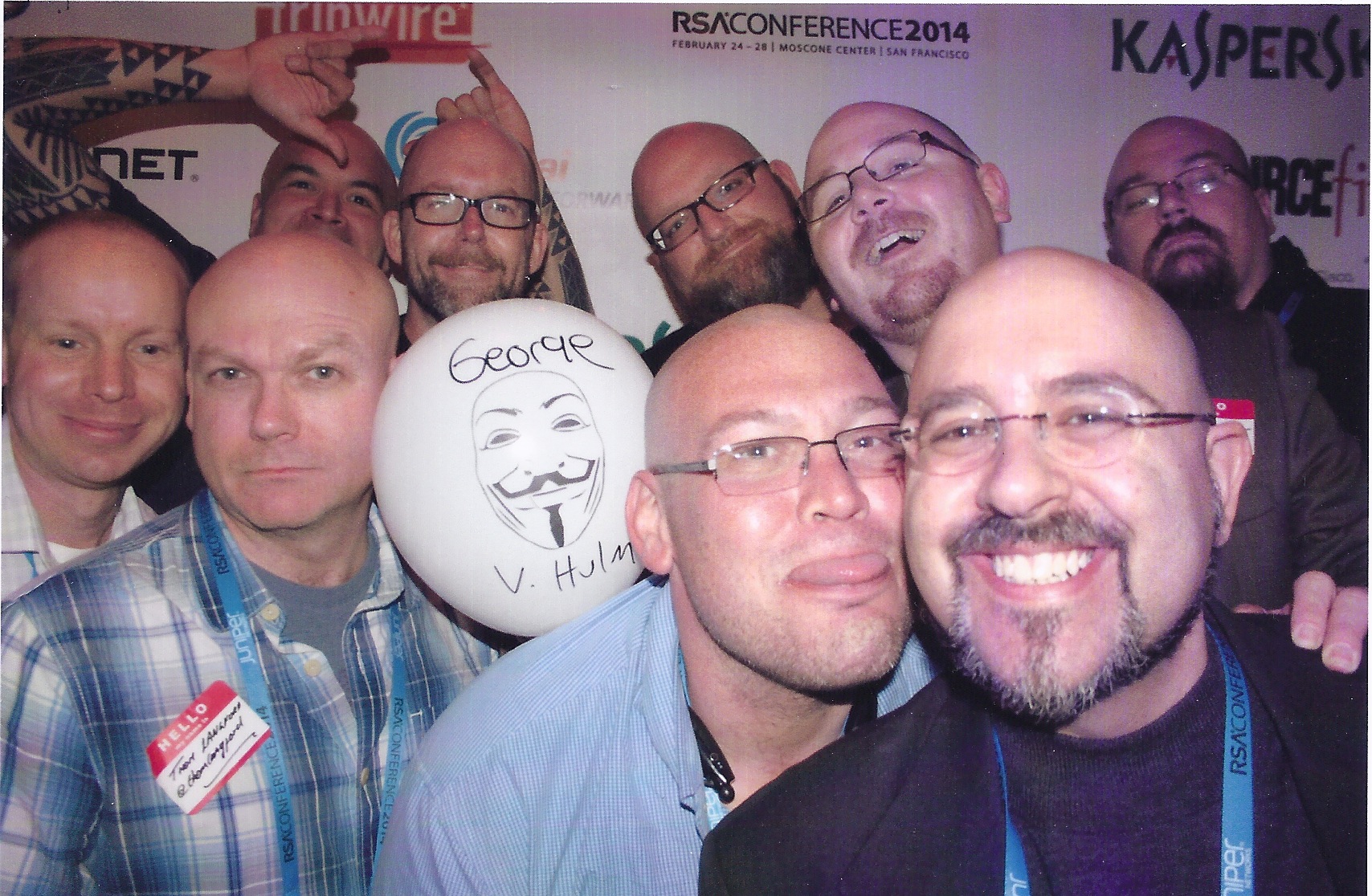
I actually only agreed with the last comment from Michael Farnum (whom I have followed on Twitter and finally got to meet for the first time at RSA… see “bald men of security” in my RSA roundup). He rightly says that that the business should not align with security, as it is the role of security to align with the business. Compare this to the question “Why doesn’t the business align better with IT?” or “Why doesn’t the business align better with HR?” and the question immediately becomes moot.

levelI think David was right to ask the question because it has uncovered with greater clarity something that I and many other have been talking about for some time now, namely that security for too long has been carying out secrurity for its own sake rather than supporting the business achieve its goals. In my own paraphrased words “this is what I need security to do to help me sell more beer“.

This was reiterated by Andy Ellis at a session at RSA where he said precisely this;

are you the conscience of the business or an enabler to the business?

Finance is there to provide money, make that money work more effectively and ensure the money is providing the best value for the good of the business. IT is there to provide technology services at the best possible value for the good of the business. HR is there to provide people, support them, nurture them and align them (or move them  out), for the good of the business.

What is your security programme doing for the good of the business, rather than the good of security? Asking this question alone will help you along to your business goals and actually help them achieve their goals, not yours.


Charlie & Lola’s Information Security Adventure

lauren_childBeing a frequent traveller, be it train, bus, car or plane, I often get to see people working in all of these environments to one extent or another. From seeing people’s laptops on the front seat of their cars to leaving them unattended in travel lounges, I have seen all sorts of behaviour that we, as information security professionals, would see as unforgivable. We regularly question ourselves as to why this happens, especially when the effects can be so dramatic and have direct impacts on our professional and personal lives.

My most recent example was just last week, sitting opposite a woman who was working on her laptop and referring to a sheaf of A3 colourful papers. They had the unmistakable artwork of Lauren Child, a children’s author and illustrator. As a father of a ten year old and an eight year I recognised the artwork and style immediately as the author of Charlie and Lola, some of my children’s favourite story characters. The papers in questions had plenty of hand drawn mark up on them suggesting this was in the final stages of editing and layout prior to printing, the story itself centering around one Elmore Green who was jealous at the arrival of a younger sibling into his family. It all ends well of course, with Elmore having someone to snuggle with at the end of  the book.

Three things surprised me. Firstly, the way in which the papers in question were left out of the direct sight of the woman concerned, either on a seat on the opposite side of the walkway, or even underneath her own seat (and very accessible from behind). Secondly I was able to discern a large amount of detail from the book in a very short period of time; this is of course partly down to the nature of the book itself, but also, because each page was carefully moved to in turn and then placed somewhere I could review it and even photograph it. Finally, I was alarmed that someone like Lauren Child, who has a very unique and successful place in children’s literature would allow an as yet unpublished book be revealed in public in such a way as this.

Fingers crossed for Elmore Green!

Fingers crossed for Elmore Green!

This is of course very serious for Lauren Child and her publishers; why was this person allowed to take large copies of this book into a public space? If they knew it needed to be worked on in a train or other public space why weren’t electronic versions made available? Or had they even considered the fact that someone could have easily stolen the manuscript and copied it for an earlier release to capture their particular market?

The implications for UK PLC are probably not that great, and yet examples like this are played out across the country whenever people travel and feel they are in ‘safe‘ environments, with a dangerous cumulative effect for the country. The combined effect of actions like this could potentially add up to the millions in lost opportunities and lost work.  It reminded me of Wendy Nather’s response to a question about public apathy to security, and her surprising yet eerily accurate response was;

I don’t think that society in general will stand up and do something about security until people start dying in enough numbers that it could happen to them individually and not just organizations because we don’t care about organizations.

I sincerely hope Lauren Child has not been hurt by this incident financially or otherwise, she has given too much joy to my children to wish that; but if she reads this I do hope she feels sufficiently motivated to insist on stronger controls around the management of her manuscripts from her publishers.  If you would like some help doing that Lauren, feel free to contact me!


Cross Post – The Human Element

(Originally posted on the Iron Mountain Information Advantage Blog, November 20 2013.)

lost-keys1Leaving things on the train or in a restaurant, or in fact anywhere is an unpleasant fact of life for many of us. I would guess that almost all the readers of this blog have at some point left their keys, wallet, shopping, hat, gloves, children, scarf or phone somewhere or other. On occasion, such lapses in concentration can be upsetting, costly, or embarrassing and in some rare instances even dangerous. But in most cases what we leave behind is either easily replaceable (gloves), insured/covered (bank cards) or worth the cost to change and replace (keys). It’s very rare that we leave and lose something irreplaceable (presumably you found the kids!). This is because the items we treasure often have significant intrinsic and/or emotional value. A good example would be family heirlooms, passed down from generation to generation; we treasure them and therefore take care to protect them, storing them in a safe (or at least a safe place) to be taken out only on special occasions.

What about leaving data somewhere? It wasn’t so long ago, that civil servants and the MOD were criticised frequently in the media for leaving highly sensitive and valuable data exposed in public places. Rarely, it seemed, did a day go by without the Daily Mail bemoaning the inability of the public sector to protect our data. Headlines called for heads to roll. And yet, invariably, these were just the kind of simple, human mistakes that every one of us have made in one way or other. These days, however, the vast majority of data is (or at least should be) encrypted, both when it is on the move and when it’s at rest. Consequently, the loss or theft of encrypted data may now raise fewer eyebrows.

Printed matter, however, is another thing entirely. You can’t encrypt paper documents, and paper is very difficult to secure during transport, without somehow physically attaching it to your person. Taking sensitive documents from one location to another, so often a necessity, quickly becomes a thing of peril. Conceptual drawings, designs, technical drawings, mock ups etc. will often need to be taken to a client site or a manufacturer, and sometimes cannot be sent electronically. After a successful pitch and a few celebratory drinks afterwards those documents could all too easily be left on the night bus to Neasden, unprotected and full of intellectual property and sensitive information. A breach like that can so easily turn a night of celebration into a morning of embarrassment and apologies, followed by the inevitable search for new clients.

Protecting printed documents is difficult, probably more difficult than electronic information, and yet we seem to put all of our efforts into the very latest and best encryption, protected USB keys, and expensive data loss prevention (DLP) initiatives. It’s easier to put in place a technology, especially a “transparent” one than it is to change behaviours.

I would suggest that the information security community needs to address this disparity; the paperless office hasn’t transpired, the digital documents are secured, but paper has been left behind. How can we address this without handcuffing briefcases to people? As usual, it has to come down to awareness, we need to drive home the message that paper should be transported with the same care as electronic records, observing sensible procedures such as ensuring there are always two people present when travelling with paper (to act as more of a reminder than as a physical protection) or even only couriering them with a specially selected and reviewed vendor.

I don’t want to turn the Chief Information and Security Officer into a George Smiley type character, but I do want all of our sensitive records to be treated with the same level of protection irrespective of format.


Top Five From RSA USA 2014

rsac2014-program-guide-cover-320x407pxI attended the RSA Conference USA last week and was able to witness the chaos, FUD, genuine insight, original thoughts and 25,000 people queueing for a coffee and bagel at 10 o’clock in the morning.

Rather than even attempt to do an end of show round up that other have been able to do far more successfully than me, here are the five things that I remembered the most from the week:

3M Visual Privacy

I still think 3M produce the best privacy filters for monitors, but I have been waiting a long time for technology to catch up and remove the unsightly and easily-left-behind at home piece of plastic in favour of a solution built into the screen itself. Whilst I didn’t unfortunately see that, one of the product managers assured me that this is exactly what the boffins at 3M are currently working on. This is going to be a huge step towards universal and transparent (forgive me) visual security for people using laptops in public places.

MISD_PrivacyFilters_Apple_IMG_ENWW3M also surprised me by demonstrating a pice of software they have designed as well; the known problem with privacy filters is that they only protect you from people looking at your screen from your left or right. From directly behind you they can easily see your screen. The software uses the built in webcam to recognise the users face, and if another face appears in the background looking at the screen, pops up a warning to the user and blurs the screen. To be honest it was a little clunky when I saw it, and it is currently only being developed for Windows, but this is exactly the sort of environment that people working with sensitive information need to “watch their backs” almost literally. I hope they continue to refine the software and expound it to all other major platforms.

Security Bloggers Meetup

sbnRSAC USA sees the annual meet up of the Security Bloggers Network, so i was very excited to be able to attend this year and witness the awards show and a great deal of silliness and nonsense (to whit, the “bald men of InfoSec” picture for one). I managed to meet for the first time a whole bunch of people that I have either conversed with or followed myself, and some of whom I have very much admired. No name dropping I am afraid as there is too much of that later on in this post, but one thing I did take away was that there is a very valid desire to harmonise the North American and European Security Blogger Awards moving forwards which can only be a good thing and build the international blogger network further. In fact, you can now nominate for the EU Security Bloggers awards here.
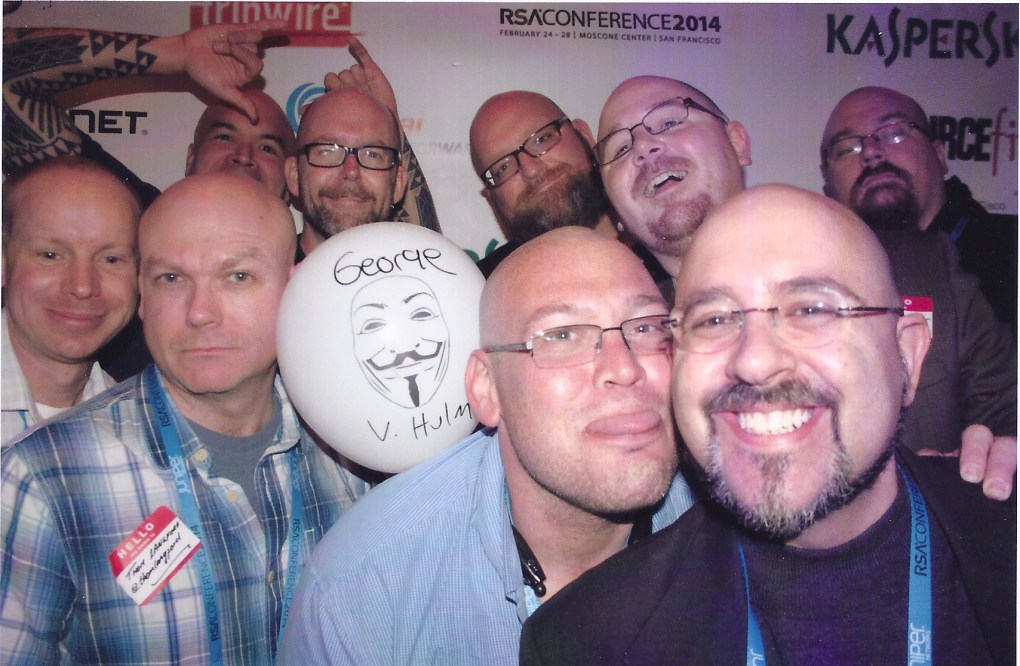
The "infamous" bald men of security.

The “infamous” bald men of security.

SnoopWall and Miss Teen USA

snoopwall-website-logoIt wouldn’t be a security conference without some kind of booth babe furore and this one was no different. Although the presence of booth babes has dramatically reduced over the last few years there were still a few vendors insisting on using them. And then we thought we had hit a new time low with the presence of Miss teen USA, Cassidy Wolf, at the SnoopWall booth in the South Hall. Condemnation was rapid and harsh. BUT WAIT… THERE’S MORE TO THIS STORY THAN MEETS THE EYE! After I retweeted my feelings about a teens presence at a conference that could best be described as a recovering alcoholic when it come misogyny, I was contacted by Patrick Rafter, the owner VP of Marketing of SnoopWall.

They have partnered with Cassidy to promote privacy amongst teens in complement to their product that detects the misuse of, for instance, the webcam on your computer or your phone. For those that may not know, Cassidy was the victim of blackmail from an ex classmate who hacked into her webcam in her bedroom, took photos and then demanded more pictures. It goes without saying she stood up to the blackmailer, and has since made privacy one of her “causes” during her tenure as Miss Teen USA. Was having her at their booth at RSA a little misjudged? Yes. Is their cause and campaign (and software for that matter) actually have very good intentions? Absolutely. I chatted with Patrick a day later and while he acknowledged how Cassidy’s presence could have been misinterpreted, he strongly defended her presence and her intentions. I honestly found it laudable. Hopefully over the next few years as the industry finally sorts out its booth babe problem, people like me won’t be jumping to the wrong conclusions as we assume the worst.

The Thomas Scoring System
Thomas Scoring System LogoA few months ago I posted about Russell Thomas’ approach to risk management. I had the good fortune to meet with Russell at the Security Bloggers Meet Up and chatted in depth about his approach to measuring risk consistently. He has turned this idea into a very practical approach via an Excel spreadsheet, a point I made in my earlier review. This is important because without a way to implement at a very practical level it remains a theory. The following day Russell was kind enough to walk me through how to use the system in practical terms, and I am going to be trying it out in my day job as soon as possible. I would urge you to take a look at the Thomas Scoring System as I strongly believe it is a great way of bringing metrics together in a meaningful way.

Gene Kim & The Phoenix Project

I was fortunate enough to have been introduced to Gene Kim, the founder of Tripwire, author, DevOps enthusiast and all round genius/nice guy a few months ago, and we had chatted a couple of times over Skype. (Gene is very generously offering me his guidance around writing a book and his experiences publishing it; yes you heard it here first folks, I intend to write a book!) Knowing he was at RSA I was able to seek him out, and I can now say I have met one of my InfoSec heroes. He is a genuinely charming, funny and generous guy, and he was good enough to sign a copy of his book, The Phoenix project, as well as allow me to get a selfie with him. I would strongly encourage everyone in this field, as well as many of those not in it to read The Phoenix Project, as it quite literally changed the way I looked at the role of InfoSec in a business, and that wasn’t even the main thrust of the book.

Gene very graciously allowing me to take a selfie with him

Gene very graciously allowing me to take a selfie with him

It has taken me nearly a week to recover from RSA, but despite the scandal and boycotts and minor demonstrations it was an excellent conference, as much for the presentations as the “hallway track”. As always, my thanks to Javvad for being my conference wing man again.

Is that Javvad, or a waxwork I am posing with?

Is that Javvad, or a waxwork I am posing with?

Now it is back to real life.


An Approach to Risk Decision Making – a Review

Public expenditure

I decided to write a review of a paper submitted to wired.com on the subject of “An Approach to Risk Decision Making” by Curt Dalton. I must however declare an interest in this, in that I happen to report to Curt in my day job (he is global CISO), and that he was kind enough to share drafts with me as he wrote it for feedback. This will of course therefore be a somewhat biased review, although not too much, but I do hope if nothing else it generates conversation around topics and approaches like this. I have a huge respect for Curt, have learnt much from him over the last few years and hope to get a good score in the next performance review!

In essence, this model is designed to help an orgnaisation decide if it is financially viable to invest in security technology/controls/procedures in order to address a given risk. It is not designed to be used across an organisations risk management porogramme, but rather with those handful of risks that can’t be addressed in day to day operations and have to be escalated to senior management to be effectively resolved.  With limited budget and access to that senior leadership, this approach provides support and guidance on what to ‘fix’ and what not to fix.

This scope is a key element of the model; it uses very traditional approaches to monetizing risk versus the more in vogue approach I have reviewed elsewhere in this blog. To that end it uses assigned numerical values to elements of its calculations; this is of course where ‘errors’ may creep in, but in theory an experienced risk manager familiar with their environment should be able to assess this reasonably well.

In summary, the model is as follows:

Figure1_660

Figure 2 in the model requires an analysis of controls required to address a risk.

Figure2_660

This does of course beg the question, how do you know you have all of the controls required and how do you know you have selected the correct numerical value? Again, the pragmatist in me suggests this is entirely possible with someone who is familiar with the environment and the organisation, but this may of course be more difficult in other situations.

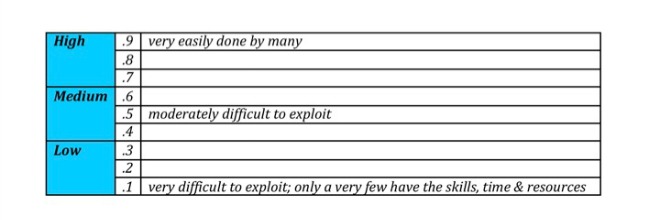
Figure 3 does a similar thing with a similar level of granularity, i.e. defining in nine increments the ease of exploitation of a given risk; where I think there is potentially something missing is that this value applies to ALL of the risks listed in figure 2 rather than individually.

Figure3_660

Obviously this would massively increase the complexity of the solution but this is a deliberate approach to ensure simplicity across the model.

These two numbers are then combined with a simple calculation of impact to etsablish a level of monetized risk. Finally, the 80/20 rule (or Pareto’s Principal) is used as a rule of thunmb to define the actual budget that should be spent to mitigate a risk. In the example given therefore a monetized risk of roughly $1.5m USD should be mitigated by spending up to $380k USD and no more. The Pareto Principal can of course be adjusted accoring to your organisations risk appetite, that is, the more risk averse the organisation the more the rule would move from 80/20 to 70/30 or 60/40 etc..

There are a lot of assumptions used in this model, not least the numerical values that may seem to be arbitrarily assigned. However, I believe this can be forgiven for the very simple reason that this is a pragmatic, transparent and easily understood approach; it can be easily transferred into an Excel spreadsheet meaning that some simple modelling can be carried out. I have said before that until the newer approach to risk management has a more easily understood and implentable approach it will not be adopted. This model does.

The other part to this model that I like is that it is not designed to be a cure all, but rather a tool to help organisations decide where to spend money. If the approach is understood then an informed decision can be made within the constraints of that model (or indeed any other model). I believe it is influenced by the ISO27005 approach to risk management which means many risk management folks will be able to grasp and adopt it more easily.

Overall, this is a model that can be adopted quickly and easily by many organisations, and implemented successfully, as long as its basis in assigning numerical values is understood, and calculations are carried out by those in a position to understand their risk profile well. I would strongly recommend you tai a look at the model yourself over at Wired Innovation Insights.

Pros – easily understand, pragmatic, focussed on one business issue, easily implemented.

Cons – relies on assigning ‘arbitrary’ numerical values, doesn’t address granularity of risk and ease of exploiutation.