Risk, Rubble and Investment

rubbleOriginally written and posted October 13th 2014 on the InfoSecurity 2014 Blog (and reiterating a pet core message of mine  again!).

Risk is a bad thing. Therefore risk needs to be reduced to rubble, or even better to dust and then swept away under the carpet never to be seen again.

This is the attitude that many of us have, and then pass onto our senior leadership when it comes to information security programs. “Invest £10 million and we will buy technology that will make us safe” we have often said in the past. “My blinky boxes will soon find your risks and reduce them to nothing!”. It should be no surprise for so many of our industry therefore that CISO stands for “Career Is So Over”.

What we often fail to appreciate is that the senior leadership and boards of virtually all organizations understand risk far better than us. They deal with financial, legal, HR and international risk on a regular basis, and know how to take advantage of it to their benefit. Their advisors in the various fields know how to communicate their unit risks in a way that makes sense to business, be it financial, reputational or whatever else makes sense in their industry. The leadership do not require specialist knowledge of these areas because the risk is being translated into terms they understand.

The information security industry however still often talks in terms of “APT’s”, “DLP”, “TLS” and other obscure TLA’s* while trying to explain why more money is needed to “secure all the things”. What is the benefit to the business? What is the real risk in terms everyone can understand? Translating these technical issues and risks into business risks has always been a challenge and has often resulted in information security being perceived as the “expensive part of IT” asking for more money with little positive influence to the business.

If you work in a brewery, the ultimate goal of everyone who works there should be to sell more beer. If you work for Oxfam, the ultimate goal is to get aid to those that need it as quickly, effectively and efficiently as possible. If you work in a publicly listed company, the ultimate goal is to make more money for the shareholders. The role of information security within any organization is not exempt from this; security doesn’t get a special pass because it is, well, security. The role of the information security function is to support the ultimate goal of the organization it operates in.

Understand what your ultimate goal is. Focus your strategy on ensuring you are helping meet that goal. Be willing to compromise in certain areas of security if it helps meet that goal. Ensure you senior leadership understand the risks (in their language, not yours) involved in those compromises. if you don’t get what you want then move onto the next piece of work that supports your ultimate goals (or be prepared to fight harder and more lucidly for your original cause).

If it was that easy you wouldn’t be reading this, but surely it is easier than the ongoing battle for investment that we ultimately never win anyway?

*Three Letter Acronyms (surely you know that?)


Computing SecurityNote: Many of you know I was up for the “Personal Contribution to IT Security” Award at the recent Computing Security Awards. I was (un)fortunately Runner Up in this category, but thank you again to all of you who not only may have voted for me but also nominated me in the first place. It was a wonderful evening with good friends from my work and InfoSec life, and a good excuse to dress up in my best party frock. Here’s to next year!

IMG_4119


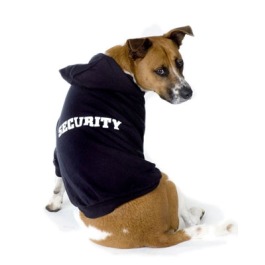
Woof Woof, Bark Bark (or how to not support security in your organization).

security_dog_hoodie_on_black_whiteI recieved the email below from a colleague at work. At first glance it is funny, the chief security officer being represented by a dog… Hilarious! Of course security is just about being able to bark at people and occasionally bite them. This role isn’t about corporate responsibility or even enterprise risk management, it is about wagging your tail and barking at people and getting them to do things because you have barked it so.

I’m having second thoughts about my growth plan if this is where it leads to.

CSO dog

If I am honest, I am guilty of this too. I have often described myself as an “overpaid security guard” to people who haven’t a clue about information security, and they nod knowingly at me, thinking they understand InfoSec policy, enterprise risk and even DLP.

The above example of belittling the security function of an organisation has steeled me into action; if I can’t explain the role of a CISO/CSO to my Mother, then I need to re-evaluate what it is I am doing and the impact it has on the business. It also annoys me that the role of CISO is so easily belittled. I don’t think I have ever seen a CFO role boiled down to an image of a coffee bean, or even the CIO image reduced to a mouse or keyboard. What makes this worse is that this product offers “the highest security for your files in the cloud” and yet this is how seriously they take security.

A fundamental part of this is down to us as CISO’s and security people to ensure we don’t belittle ourselves to ingratiate ourselves. It is extremely difficult for us to ensure we are valued and respected in our organisations as it is, and sometimes the somewhat subservient/comedic route feels easiest. This is not the best way; it is the longest and hardest route to acceptance and understanding because the role is by it’s nature seen as a frivolity and a hilarious side act.

(We should note however that there is a place for humour in security, and if used correctly it is extremely effective. The point I am making above is that security as a serious subject should not be presented as a humourous aside.)

I recall a situation where I noticed someone working at a hot desk who had no visible identification. I asked around if anyone knew who the individual was, and nobody did. As I approached the individual I was met with a chorus of “get him Thom” and “tackle him mate!” etc. with much hilarity ensuing. None of it was meant meanly of course, but it was synonymous with the  simplistic attitude of security. If any of the people who had spoken those words had any real idea of the security implications of having someone in their office without any idea of who they are, then their response may have been a bit more serious. The best part is of course that I had plainly failed in my security education and awareness with this group of people.

We are not guard dogs. We are not security guards (although they are an important part of the security function). We are not bouncers. We are not doing security for theatrical effect.

We are here to protect your revenue, your reputation and your bonus payouts. We are here to ensure we maintain good relationships with our clients, and allow our organisations to take on greater risk and therefore reap greater reward. We are here to help inform the business of security risk and advise as required.

What’s so funny in that?

Note: I have been extremely quiet on here these last few months; my role has changed dramatically at work requiring more travel and less time for the frivolous acts of blogging. Combine that with a busy schedule with Host Unknown and my other info sec commitments I have neglected this blog site somewhat. Hopefully this post sees me back in the saddle again, and you can always catch up with me on Twitter. Oh, and the holiday was good too!

ThomLangford_2014-Aug-10

ThomLangford_2014-Aug-10 1


A more secure cashpoint/ATM transaction?

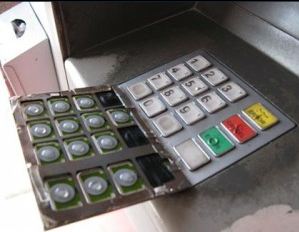
skimgallery1There has been much written and talked about over the years about the use of skimming devices and cameras being installed on cashpoints (ATM’s for my international readers), their increasing complexity and ability to seamlessly blend into the cashpoint itself. With the card being entered and read, and the PIN code either intercepted with lay on keypads or filmed with cameras, the criminals ability to clone cards is quite significant, and the financial rewards high. Most of us, if we were honest, would struggle to see a sillfully crafted and installed skimmer on an average ATM.

Why are we still so reliant on this kind of security? Sure, it is technically two-factor, with the card that I have and the PIN that I know, but as my previous statements show very clearly, this security can be bypassed very easily.

The Royal Bank of Scotland (RBS) quietly announced a new feature last year to their mobile app that allows cash to be removed from an RBS or NatWest cashpoint without a card. Given there has been much research on the fact that people were no more likely to forget their wallets and purses than their phones, and actually become more distressed at not having their phone over their wallet, the bank could see a shift in how people were becoming increasingly reliant on their smartphones.

The process is straightforward; after logging into the (already downloaded) app, and pressing  “Get Cash” one simply types in the amount of money they would like to withdraw, and is then presented with a six digit, one time use PIN. This PIN can also be texted or sent to someone else if need be. (VERY useful to help out friends and family in distress.) One then uses an RBS or NatWest cashpoint (unfortunately other banks do not participate in this scheme) , presses enter on the keypad, and then enters the six digit PIN number twice followed by the amount of money that was originally requested. The cash is then dispensed. If more money is required, the process is repeated and another, different, six digit PIN is issued.

To my mind this is an excellent innovation, and other thought so too, with the creators behind the enhancement, SapientNitro being awarded a Cannes Lion at last years show. A slightly cheesy advert follows…

(Note: at this point it is worth me declaring my interest, as I am an employee of Sapient, the parent company of SapientNitro. That said, I was using the service before I realised it was Sapient that came up with the idea in the first place!)

This works in many ways:

  1. 1: The pin is only used once, so it doesn’t matter if a skimmer is in place, it is recording only a one time password.
  2. 2: Your card cannot be cloned as it is never used.
  3. 3: It is convenient because nights out only involve looking after your phone, not you phone and cash card and cash!
  4. 4: Even if you phone is lost, it is password protected, tracked, and you r banking app is also PIN protected with more than a four digit pin code (it is, right?). You can also wipe your smartphone remotely in most cases.

pizzaexpressA UK food chain, Pizza Express, did a similar thing last year as well, whereby on the bottom of the receipt is a unique code that allows people to pay with PayPal; again this is smart (your misgivings about PayPal aside) as your card cannot be taken around the back and cloned without your knowledge, as the payment is sent directly from PayPal to the restaurant and notification received on the till. Of course every time I have tried to use it the code has always been misprinted stopping me from doing so! Lovely idea nonetheless…

So what is the upshot of this? Most importantly I think it shows how with the judicial use of technology we can keep one step ahead of the criminals. Of course they will catch up, and of course there are other security implications (a rise in smartphone theft perhaps?) but RBS has shown that a relatively small change in their systems can result in a huge change in the security of their transactions. As of writing I am not aware of any other UK bank having this capability (they seem to be focussing on the ability to send payments to friends rather like PayPal than anything else), but this kind of approach should become the new norm.

It is this application of security alongside the ability to truly understand their clients and their needs that in this case has allowed RBS to steal a march on their competitors. I know this simply because of the looks on the faces of my friends when I take cash out of the cashpoint without using my card; it is magic, and they like it…

This is truly a case over security versus convenience… but with added convenience.


Charlie & Lola’s Information Security Adventure

lauren_childBeing a frequent traveller, be it train, bus, car or plane, I often get to see people working in all of these environments to one extent or another. From seeing people’s laptops on the front seat of their cars to leaving them unattended in travel lounges, I have seen all sorts of behaviour that we, as information security professionals, would see as unforgivable. We regularly question ourselves as to why this happens, especially when the effects can be so dramatic and have direct impacts on our professional and personal lives.

My most recent example was just last week, sitting opposite a woman who was working on her laptop and referring to a sheaf of A3 colourful papers. They had the unmistakable artwork of Lauren Child, a children’s author and illustrator. As a father of a ten year old and an eight year I recognised the artwork and style immediately as the author of Charlie and Lola, some of my children’s favourite story characters. The papers in questions had plenty of hand drawn mark up on them suggesting this was in the final stages of editing and layout prior to printing, the story itself centering around one Elmore Green who was jealous at the arrival of a younger sibling into his family. It all ends well of course, with Elmore having someone to snuggle with at the end of  the book.

Three things surprised me. Firstly, the way in which the papers in question were left out of the direct sight of the woman concerned, either on a seat on the opposite side of the walkway, or even underneath her own seat (and very accessible from behind). Secondly I was able to discern a large amount of detail from the book in a very short period of time; this is of course partly down to the nature of the book itself, but also, because each page was carefully moved to in turn and then placed somewhere I could review it and even photograph it. Finally, I was alarmed that someone like Lauren Child, who has a very unique and successful place in children’s literature would allow an as yet unpublished book be revealed in public in such a way as this.

Fingers crossed for Elmore Green!

Fingers crossed for Elmore Green!

This is of course very serious for Lauren Child and her publishers; why was this person allowed to take large copies of this book into a public space? If they knew it needed to be worked on in a train or other public space why weren’t electronic versions made available? Or had they even considered the fact that someone could have easily stolen the manuscript and copied it for an earlier release to capture their particular market?

The implications for UK PLC are probably not that great, and yet examples like this are played out across the country whenever people travel and feel they are in ‘safe‘ environments, with a dangerous cumulative effect for the country. The combined effect of actions like this could potentially add up to the millions in lost opportunities and lost work.  It reminded me of Wendy Nather’s response to a question about public apathy to security, and her surprising yet eerily accurate response was;

I don’t think that society in general will stand up and do something about security until people start dying in enough numbers that it could happen to them individually and not just organizations because we don’t care about organizations.

I sincerely hope Lauren Child has not been hurt by this incident financially or otherwise, she has given too much joy to my children to wish that; but if she reads this I do hope she feels sufficiently motivated to insist on stronger controls around the management of her manuscripts from her publishers.  If you would like some help doing that Lauren, feel free to contact me!


If It is Too Good To Be True, It Probably Is – Cross Post

(Originally Posted on Information Security Buzz on 15 January 2014)

There are plenty of tips on the internet that give great advice on how to avoid phishing scams, and there will be other authors on this site that will be giving very similar advice. For me though, it always comes down to the following three thoughts that I keep in mind whenever I see an email that could possible lead to a scam.

1. Is it too good to be true?

Infosecurity-Buzz-January-2014.002.jpg.001-300x168If the email in question is offering me something for nothing, especially if there is money, or a monetary value involved, this type of email falls into the “too good to be true” category. I have yet to come across an example of when someone really was giving away iPad’s, cash or holidays without some kind of quid pro quo involved. If your answer to the above question even looks like it might be a “yes”, the email and its contents can probably be ignored.

2. Don’t Click it!

Infosecurity-Buzz-January-2014.002.jpg.002-300x168I have borrowed this particular phrase from Jaded Security who coined it a few years ago, and I like it because to be honest it is simple and memorable advice. There are nuances to this of course, but unless you are experienced just don’t click links in your email (see number three). As you get used to looking out for this kind of email there will of course be other telltales that will help you know if an email is genuine or not. For instance, is the email from a close friend, but they haven’t addressed you by your nickname, and seem to be oddly formal, or have more spelling mistakes (or even not enough) in their message? It could be that they have been compromised and you are in their address book and therefore being targeted.

Some people regularly send links in emails, others almost never; if that’s the case, ask yourself why they have suddenly started today seining you a link to a sneezing panda clip.

Finally, if your bank sends you a link to change your password because of system upgrades, don’t click the link they send, but go to your usual bookmark for them. Your bank should never do this anyway, but clicking on a link in an email like this is almost guaranteed to not send you to your bank, but a very convincing fake site set up to harvest your usernames and passwords. Just don’t click it.

3. Fail Safe

Infosecurity-Buzz-January-2014.002.jpg.003-300x168It is always better to mistake a genuine email for a scam rather than the other way around. The consequences of clicking something are very serious whereas the consequences of not clicking on the attached link are rarely, if ever, serious. Additionally, if it is a genuine request, the sender is likely to send a reminder or contact you through another medium such as SMS, letter or telephone. Of course there are plenty of scams through these mediums too (another topic perhaps?), but you will have the balance of probabilities on your side, and the knowledge you haven’t done anything stupid.