Woof Woof, Bark Bark (or how to not support security in your organization).

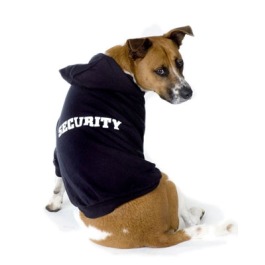
security_dog_hoodie_on_black_whiteI recieved the email below from a colleague at work. At first glance it is funny, the chief security officer being represented by a dog… Hilarious! Of course security is just about being able to bark at people and occasionally bite them. This role isn’t about corporate responsibility or even enterprise risk management, it is about wagging your tail and barking at people and getting them to do things because you have barked it so.

I’m having second thoughts about my growth plan if this is where it leads to.

CSO dog

If I am honest, I am guilty of this too. I have often described myself as an “overpaid security guard” to people who haven’t a clue about information security, and they nod knowingly at me, thinking they understand InfoSec policy, enterprise risk and even DLP.

The above example of belittling the security function of an organisation has steeled me into action; if I can’t explain the role of a CISO/CSO to my Mother, then I need to re-evaluate what it is I am doing and the impact it has on the business. It also annoys me that the role of CISO is so easily belittled. I don’t think I have ever seen a CFO role boiled down to an image of a coffee bean, or even the CIO image reduced to a mouse or keyboard. What makes this worse is that this product offers “the highest security for your files in the cloud” and yet this is how seriously they take security.

A fundamental part of this is down to us as CISO’s and security people to ensure we don’t belittle ourselves to ingratiate ourselves. It is extremely difficult for us to ensure we are valued and respected in our organisations as it is, and sometimes the somewhat subservient/comedic route feels easiest. This is not the best way; it is the longest and hardest route to acceptance and understanding because the role is by it’s nature seen as a frivolity and a hilarious side act.

(We should note however that there is a place for humour in security, and if used correctly it is extremely effective. The point I am making above is that security as a serious subject should not be presented as a humourous aside.)

I recall a situation where I noticed someone working at a hot desk who had no visible identification. I asked around if anyone knew who the individual was, and nobody did. As I approached the individual I was met with a chorus of “get him Thom” and “tackle him mate!” etc. with much hilarity ensuing. None of it was meant meanly of course, but it was synonymous with the  simplistic attitude of security. If any of the people who had spoken those words had any real idea of the security implications of having someone in their office without any idea of who they are, then their response may have been a bit more serious. The best part is of course that I had plainly failed in my security education and awareness with this group of people.

We are not guard dogs. We are not security guards (although they are an important part of the security function). We are not bouncers. We are not doing security for theatrical effect.

We are here to protect your revenue, your reputation and your bonus payouts. We are here to ensure we maintain good relationships with our clients, and allow our organisations to take on greater risk and therefore reap greater reward. We are here to help inform the business of security risk and advise as required.

What’s so funny in that?

Note: I have been extremely quiet on here these last few months; my role has changed dramatically at work requiring more travel and less time for the frivolous acts of blogging. Combine that with a busy schedule with Host Unknown and my other info sec commitments I have neglected this blog site somewhat. Hopefully this post sees me back in the saddle again, and you can always catch up with me on Twitter. Oh, and the holiday was good too!

ThomLangford_2014-Aug-10

ThomLangford_2014-Aug-10 1


That was the week that was; InfoSec Europe, BSides and the Security Bloggers Network

?????????????????????????????????????????A lot of good stuff has already been written about this last week with regards to BSides London, InfoSecurity Europe and the Security Blogger awards, so this post is a personal recollection after the haze of too many late nights, early mornings and good times.

Tuesday 29th bought BSides London, and once again the volunteers surpassed themselves; it retained two tracks but definitely felt expanded with the workshops and a new location for the rookie track. The organizers should feel rightly proud of what they have done, and those of you who didn’t turn up on the day (and therefore denied others of a ticket) should take good long look at themselves in the mirror.

photo 5

The Danger Zone Dream Team

I had to spend the afternoon over at Infosecurity Europe as I was on a panel titled “One big threat to cyber security: IT Geeks can’t talk to management” alongside Dwayne Melancon and Stephen Bonner. It was only 25 minutes long but I felt we managed to push a lot of good advice and takeaways into it, and the conversations continued afterwards in the hallway. I even managed to get a reference to Kenny Loggins into one answer, something I feel rightfully proud of.

BmZdYWHIIAAf1Lq.jpg-large

Joseph & Ian rocking the BSides Rookie Track

photo 1

Trying to look young again…

Then back to BSides to see Joseph Gwynne-Jones speak on the rookie track. I was mentoring Joseph this year, and to be honest I found it very challenging as Joseph is profoundly deaf; we couldn’t speak in the run up to BSides and could only communicate over email and Twitter. I advised as best I could, reviewed slides etc, but what was crucial was the ability of his interpreter being able to effectively communicate the jargon etc on the day. Given Joseph wouldn’t meet him until the morning of the conference this would be quite a challenge. As it turned out Ian Hodgetts  did a marvelous job, and was also on hand to interpret into British Sign Language (BSL) of all of the talks Joseph went to. We believe this is a first for an info security conference. Joseph obviously did an absolutely cracking job and I was able to spend some time with him and Ian afterwards talking about what else we could do in the future to improve further. It was an eye opener for me, and an absolute education in how important it is to communicate clearly and effectively in these kinds of conferences to absolutely everyone who attends. At the after party I was able to wear the hoody that was generously given to me by the Abertay Ethical Hacking Society, and feel like a student again (if not look like one).

photo 4

Best Personal Security Blog

Wednesday bought Infosec Europe again after a few early morning meetings, (including some scheming and rubbing of hands with invisible soap with the good folks of 44CON at the 44Cafe – I can’t wait for September!) but the highlight was of course the Security Bloggers Awards. Between me and Host Unknown I was up for eight awards in total, and came away with the award for Best Personal Security Blog, again! I was both surprised and touched that I was able to get this award again. Host Unknown didn’t fare as well unfortunately, but I can guarantee that the next twelve months will put us in a very strong position for next year, both at the European awards as well as the USA awards at RSA. Unfortunately Andrew was indisposed to help us collect a Host Unknown prize (that we didn’t win).

BmobKKsIgAAdZfj.jpg-large

Confirming what everyone already knew

(I have said this before but will say it again, everyone who is not only involved but also nominated for the blogger awards represents the very best of our industry in that they are all contributing their time and expertise to the community; I can’t recommend enough that if you are reading this that you also read their blogs too. Also, none of this would have happened without Brian Honan, Jack Daniel, Tenable, Tripwire and Firemon; thank you all.

Thursday bought another panel, this time in the Keynote Theatre with a panel on “Risk and control: Effective risk assessment methodologies to drive security strategy and investment” (alongside Vicki Gavin, Paul Haywood and moderated very well by Dave Clemente. It was a good, vibrant session and with plenty of questions both during and after the session.

photo 2

Inspired by the success of the CI Double SP film, we create a band called “CISS (P)”

A selfie, with a very famous CISO of Restricted Intelligence

A selfie, with a very famous CISO of Restricted Intelligence

Finally for the afternoon I got involved in only what can be termed a “flash mob” for Twist & Shout (as soon as that is released I will show it here!) and then got engrossed in the hallway track with the likes of Shan Lee, Quentyn Taylor, Peter Stephens, Jim Shields, Dave Lewis, Wim Remes, of course my conference partner in crime Javvad, and the lovely folks of Eskenzi and Acumin.

If there is one thing that is apparent form the above it is that any conference week is only valuable from the people you meet there. This list must be barely 10% of the people I shook hands with, shared a drink or said hello to, all of whom influence me to one degree or another. Whatever your thoughts on the infosec conference scene, this aspect alone is what makes it worthwhile. Apologies to anyone and everyone I have missed out.

InfoSecurity Europe is a show that has gone from strength to strength over the last few years, with the education programme improving; combine this with an excellent BSides London Conference, this week in Europe is one to look out for (although next year Infosec Europe and BSides will be from 2nd to 4th June at Olympia).


Why is using VPN so difficult?

mather-_660I was in the Manchester Central library over the last weekend, a newly refurbished space that has very recently been reopened to the public. I was only visiting Manchester, so it seemed like a good thing to do and I have to say I was very impressed with the space. There were computers and interactive kiosks throughout, even the cafe tables had a “Surface” like feel to them with images and documents you can read and manipulate with your fingers. As expected there was free Wi-Fi.

I connected to it, and duly fired up my VPN. It didn’t connect. Confused, I tried again. Still failed. Free, public Wi-Fi which blocks VPN! All I wanted to do was check the viewing figures of the latest Host Unknown video, but even that could potentially expose my Google username and password to anyone snooping; with BSides Manchester just around the corner I wasn’t about to become the subject of someone’s Wi-Fi pineapple presentation, so I tweeted my concern (as you do) and disconnected.

4_1024x1024There isn’t a piece of general security guidance that gets published that doesn’t include the advice to only connect through a public Wi-Fi point unless you are using a VPN. The risk of having your personal details, usernames and passwords transmitted and subsequently intercepted is too high and YOU MUST NOT DO IT! USE A VPN AT ALL TIMES!

Great advice, except that VPN has still not been adopted properly by any major hardware or software manufacturers of computers, tablets and smartphones. There needs to be a built in, simple and ubiquitous approach to VPN now that mirrors the adoption of anti-virus of 15 years ago and encryption of 5 years ago. There are paid for solutions for enterprises and the more technically minded and free solutions of both for the small business and home user. But not when it comes to VPN. No Apple VPN, or Google VPN for the average home user to be able to use with little effort or even understanding.

Where is VPN? Why can it not be made more accessible?

Where is VPN? Why can it not be made more accessible?

The VPN solutions on offer are typically smaller packages that the average person would simply not come across, basically the technology has yet to be commoditised. If you have a problem convincing someone to use a decent complex password, think about trying to explain to them about using a VPN.

Even Apple, whose interface design in my opinion is some of the best in the industry has missed a trick with iOS7; VPN is buried in the settings apps, rather than being on the easy access swipe menu where you can quickly and easily enable it and disable it. And what about the option to have it permanently running, automatically reconnecting when the device goes into standby? I have lost count of the number of times I have been using free Wi-Fi at a conference or hotel only to realise that at some point my VPN has disconnected me without realising it, and I am supposed to be a security professional.

Convenience always wins over security (a wise person once said) and so until VPN is made as transparent as antivirus and encryption (when installed properly) we are simply wasting our time trying to educate the greater population about using it the next time they are in Starbucks.

(Note: the Manchester Central Library Twitter account did respond, and we are in the process of communicating about the evils of open, password free Wi-Fi. Perhaps some InfoSec locals may also wish to reach out to them to educate and discuss?)


Charlie & Lola’s Information Security Adventure

lauren_childBeing a frequent traveller, be it train, bus, car or plane, I often get to see people working in all of these environments to one extent or another. From seeing people’s laptops on the front seat of their cars to leaving them unattended in travel lounges, I have seen all sorts of behaviour that we, as information security professionals, would see as unforgivable. We regularly question ourselves as to why this happens, especially when the effects can be so dramatic and have direct impacts on our professional and personal lives.

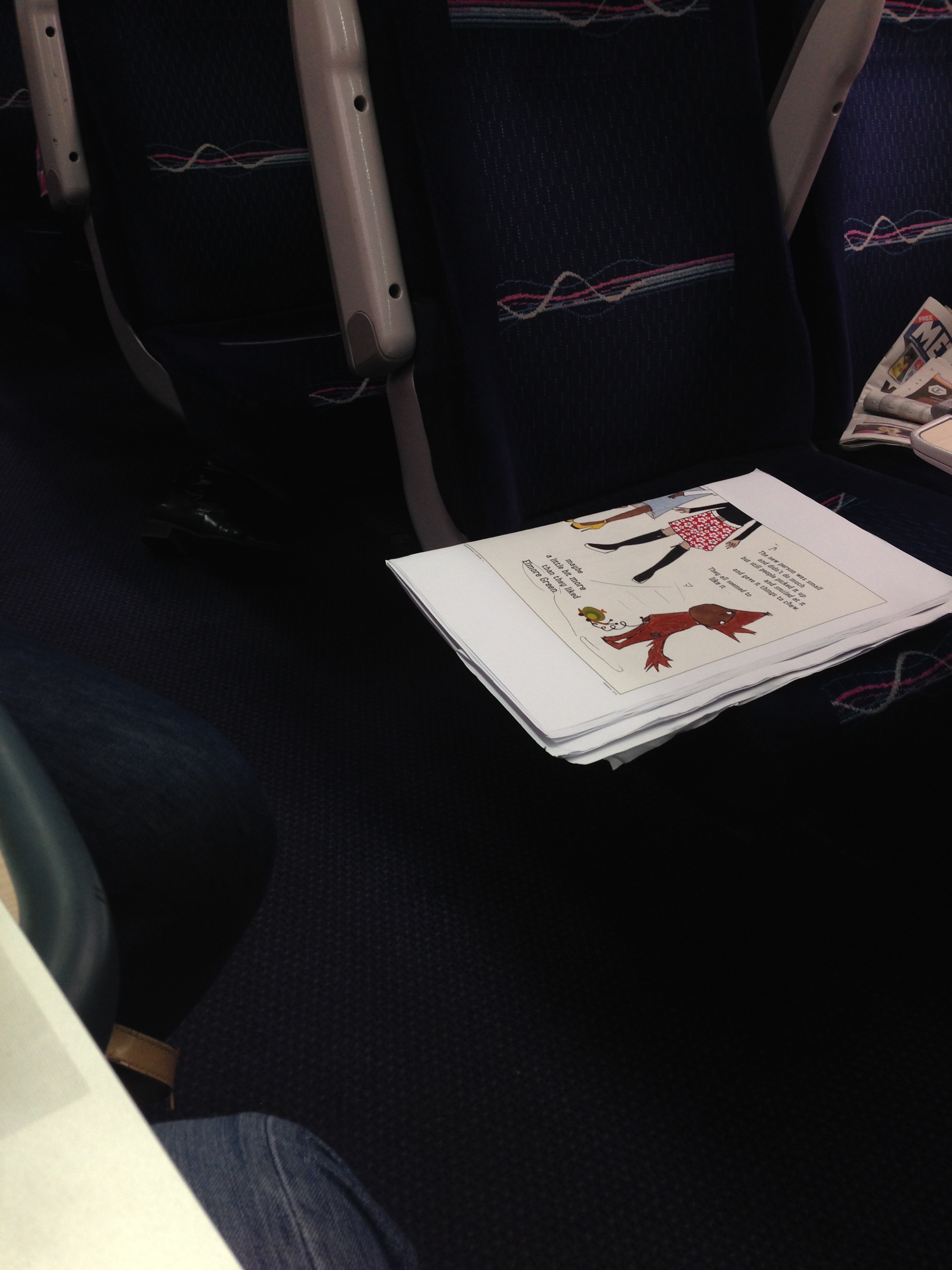
My most recent example was just last week, sitting opposite a woman who was working on her laptop and referring to a sheaf of A3 colourful papers. They had the unmistakable artwork of Lauren Child, a children’s author and illustrator. As a father of a ten year old and an eight year I recognised the artwork and style immediately as the author of Charlie and Lola, some of my children’s favourite story characters. The papers in questions had plenty of hand drawn mark up on them suggesting this was in the final stages of editing and layout prior to printing, the story itself centering around one Elmore Green who was jealous at the arrival of a younger sibling into his family. It all ends well of course, with Elmore having someone to snuggle with at the end of  the book.

Three things surprised me. Firstly, the way in which the papers in question were left out of the direct sight of the woman concerned, either on a seat on the opposite side of the walkway, or even underneath her own seat (and very accessible from behind). Secondly I was able to discern a large amount of detail from the book in a very short period of time; this is of course partly down to the nature of the book itself, but also, because each page was carefully moved to in turn and then placed somewhere I could review it and even photograph it. Finally, I was alarmed that someone like Lauren Child, who has a very unique and successful place in children’s literature would allow an as yet unpublished book be revealed in public in such a way as this.

Fingers crossed for Elmore Green!

Fingers crossed for Elmore Green!

This is of course very serious for Lauren Child and her publishers; why was this person allowed to take large copies of this book into a public space? If they knew it needed to be worked on in a train or other public space why weren’t electronic versions made available? Or had they even considered the fact that someone could have easily stolen the manuscript and copied it for an earlier release to capture their particular market?

The implications for UK PLC are probably not that great, and yet examples like this are played out across the country whenever people travel and feel they are in ‘safe‘ environments, with a dangerous cumulative effect for the country. The combined effect of actions like this could potentially add up to the millions in lost opportunities and lost work.  It reminded me of Wendy Nather’s response to a question about public apathy to security, and her surprising yet eerily accurate response was;

I don’t think that society in general will stand up and do something about security until people start dying in enough numbers that it could happen to them individually and not just organizations because we don’t care about organizations.

I sincerely hope Lauren Child has not been hurt by this incident financially or otherwise, she has given too much joy to my children to wish that; but if she reads this I do hope she feels sufficiently motivated to insist on stronger controls around the management of her manuscripts from her publishers.  If you would like some help doing that Lauren, feel free to contact me!


If It is Too Good To Be True, It Probably Is – Cross Post

(Originally Posted on Information Security Buzz on 15 January 2014)

There are plenty of tips on the internet that give great advice on how to avoid phishing scams, and there will be other authors on this site that will be giving very similar advice. For me though, it always comes down to the following three thoughts that I keep in mind whenever I see an email that could possible lead to a scam.

1. Is it too good to be true?

Infosecurity-Buzz-January-2014.002.jpg.001-300x168If the email in question is offering me something for nothing, especially if there is money, or a monetary value involved, this type of email falls into the “too good to be true” category. I have yet to come across an example of when someone really was giving away iPad’s, cash or holidays without some kind of quid pro quo involved. If your answer to the above question even looks like it might be a “yes”, the email and its contents can probably be ignored.

2. Don’t Click it!

Infosecurity-Buzz-January-2014.002.jpg.002-300x168I have borrowed this particular phrase from Jaded Security who coined it a few years ago, and I like it because to be honest it is simple and memorable advice. There are nuances to this of course, but unless you are experienced just don’t click links in your email (see number three). As you get used to looking out for this kind of email there will of course be other telltales that will help you know if an email is genuine or not. For instance, is the email from a close friend, but they haven’t addressed you by your nickname, and seem to be oddly formal, or have more spelling mistakes (or even not enough) in their message? It could be that they have been compromised and you are in their address book and therefore being targeted.

Some people regularly send links in emails, others almost never; if that’s the case, ask yourself why they have suddenly started today seining you a link to a sneezing panda clip.

Finally, if your bank sends you a link to change your password because of system upgrades, don’t click the link they send, but go to your usual bookmark for them. Your bank should never do this anyway, but clicking on a link in an email like this is almost guaranteed to not send you to your bank, but a very convincing fake site set up to harvest your usernames and passwords. Just don’t click it.

3. Fail Safe

Infosecurity-Buzz-January-2014.002.jpg.003-300x168It is always better to mistake a genuine email for a scam rather than the other way around. The consequences of clicking something are very serious whereas the consequences of not clicking on the attached link are rarely, if ever, serious. Additionally, if it is a genuine request, the sender is likely to send a reminder or contact you through another medium such as SMS, letter or telephone. Of course there are plenty of scams through these mediums too (another topic perhaps?), but you will have the balance of probabilities on your side, and the knowledge you haven’t done anything stupid.